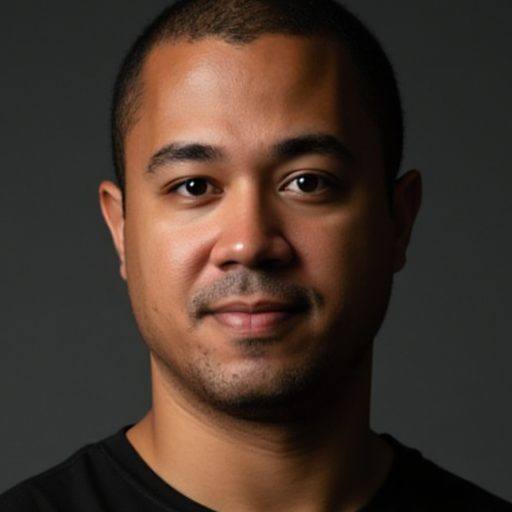
I have been building software for twenty years. Today I am a research master’s student in Health Informatics at the Federal University of Santa Catarina, Brazil (PPGINFOS/UFSC), with a FAPESC scholarship, supervised by Prof. Grace Teresinha Marcon Dal Sasso.
I work on two questions: how health systems exchange data (HL7 FHIR, openEHR, xAPI), and how AI fits into that flow without exposing personal data (LGPD, Brazil’s data protection law, GDPR and the AI Act). Everything I publish comes with a test I ran myself, on synthetic data, with open code.
Publication
Cardozo BM, Rodrigues RR, Dal Sasso GTM, Barra DCC. Results of the Application of the E4Nursing® Platform in Nurses’ Clinical Decision-Making. Studies in Health Technology and Informatics, v. 336, p. 2274-2275. IOS Press, 2026. Poster at MIE 2026 (Medical Informatics Europe), Genoa. DOI: 10.3233/SHTI260673.
Mixed-methods study with 29 UFSC nursing students on a clinical simulation platform using ICNP®, SNOMED CT and HL7 FHIR®: mean SUS of 58.1; 89% found the content relevant and 84% were satisfied with the quality of learning.
Research and demos
In my master’s I am building an AI clinical simulator for teaching clinical reasoning in nursing: Socratic method, native HL7 FHIR R4, synthetic data only. Around it I publish short, reproducible tests, each with a number and a stated limit.
- Does AI-generated FHIR pass the HL7 validator? Three open models, 30 synthetic notes: the best got 211 of 211 vital signs right, and none of the 90 Bundles passed the official validator.
- Firely FHIR validator in .NET: 120 of 180 defective resources rejected, against 80 for HealthChain.
- HealthChain FHIR validation: 80 of 180 defects caught, all structural and none of the content defects.
- DataFog PII detection in Portuguese: after redaction, 196 of 200 synthetic clinical notes still showed a full Brazilian taxpayer ID (CPF) or health card number (CNS).
- C# MCP server: with the official SDK 2.4.0 and no extra configuration, the server answered 200 with no credentials and let 500 of 500 calls through.
- Python .pth files run before your code: a one-line .pth file ran in 5 of 6 startup modes, including -I.
All the code is in nursia-research-lab (MIT license, synthetic data, an English summary in every README).
Background
- Twenty years in software, from finance to health.
- Member of the architecture team behind PIX, Brazil’s instant payment system, and Open Banking Brasil. The credit goes to the team.
- MBA lecturer at USP/ESALQ.
- Founder of Connect HealthCare (2015-2017).